When it comes to restoring or improving the appearance of your teeth, dental crowns and veneers are two commonly recommended options. While both treatments serve important purposes, they are designed for different dental needs. Understanding how crowns and veneers differ may help you have a more informed discussion with your dentist and choose a solution that fits your oral health goals.
Understanding Dental Crowns
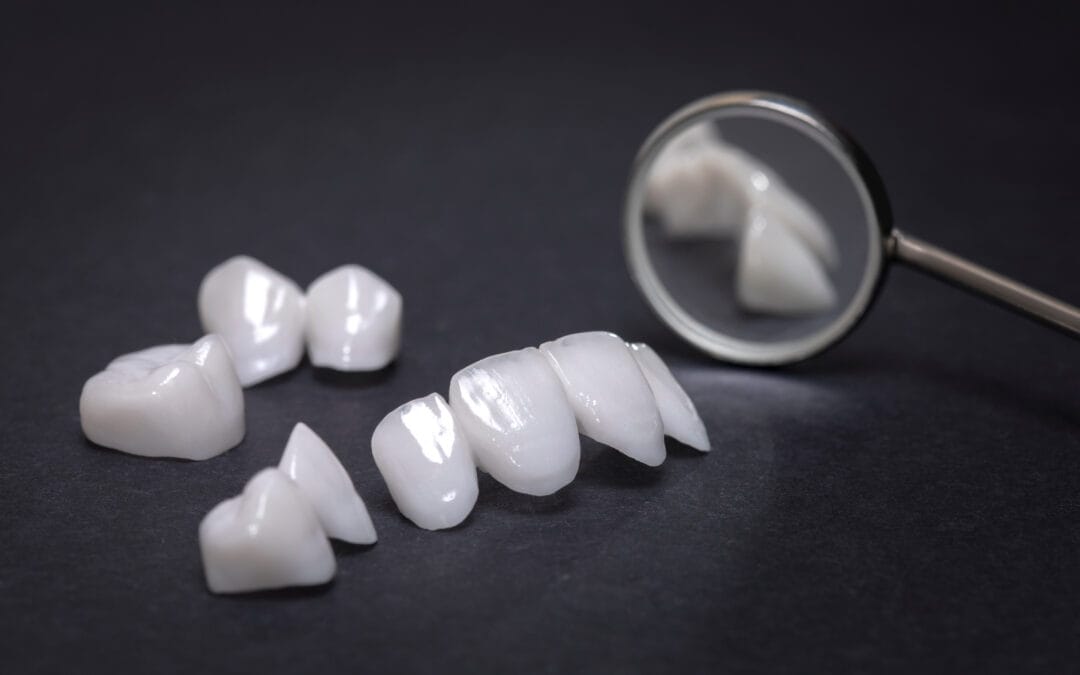
Dental crowns are designed to cover the entire visible portion of a tooth. They are often recommended when a tooth is weakened, cracked, heavily filled, or has undergone root canal treatment. By fully encasing the tooth, a crown helps protect it from further damage while restoring its shape and function.
Patients seeking dental crowns in Sarnia often do so because crowns provide added strength and durability for teeth that may not function well on their own. Crowns may also be used as part of a larger restorative plan, such as supporting a dental bridge in Sarnia when one or more teeth are missing. In these cases, crowns are placed on the teeth adjacent to the gap to help anchor the bridge securely.
What Are Dental Veneers?
Dental veneers are thin shells that are bonded to the front surface of a tooth. They are typically used to address cosmetic concerns such as discoloration, minor chips, uneven spacing, or slight misalignment. Unlike crowns, veneers do not cover the entire tooth, making them a more conservative option when the underlying tooth structure is healthy.
Veneers are often chosen by patients who are satisfied with their tooth function but want to improve appearance. Because veneers focus on aesthetics, they may not be suitable for teeth that are significantly damaged or weakened.
Key Differences Between Crowns and Veneers
One of the main differences between crowns and veneers is the amount of tooth coverage. Crowns fully surround the tooth, while veneers only cover the front surface. This distinction affects when each option is appropriate.
Crowns are generally recommended for functional and structural concerns, while veneers are more commonly associated with cosmetic improvements. Another difference is preparation. Crowns usually require more reshaping of the tooth compared to veneers, although the exact process varies depending on the individual case.
Durability is another factor to consider. Crowns are designed to withstand biting and chewing forces, especially on back teeth. Veneers, while strong, are typically placed on front teeth where the pressure is less intense.
How Your Dentist Helps Guide the Decision?
Choosing between a crown and a veneer is not a decision to make alone. A dental professional evaluates factors such as tooth health, bite alignment, cosmetic goals, and long-term maintenance. In some cases, crowns may be recommended over veneers to help prevent further damage. In others, veneers may provide a suitable solution with less alteration to the tooth.
If missing teeth are involved, your dentist in Sarnia may also discuss options like a dental bridge, which often relies on crowns for support. This highlights how crowns play a broader role in restorative dentistry beyond individual teeth.
Explore Your Restorative Options with Slipacoff Dental Centre!
If you are considering dental crowns or veneers, Slipacoff Dental Centre offers patient-focused guidance to help you understand your options and make informed decisions. Our team provides comprehensive dental care with attention to comfort, function, and long-term oral health.